Can You Snorkel the Great Blue Hole? What to Expect at Lighthouse Reef
The photograph everyone has seen was taken from a plane. From a boat deck, the famous circle is a flat patch of dark water, and what a snorkeler does out there has almost nothing to do with the hole itself.
Booking details checked 11 September 2026. Older price examples below are planning estimates, not current quotes. Use the provider for your date and full group total; sightings and weather are never guaranteed.
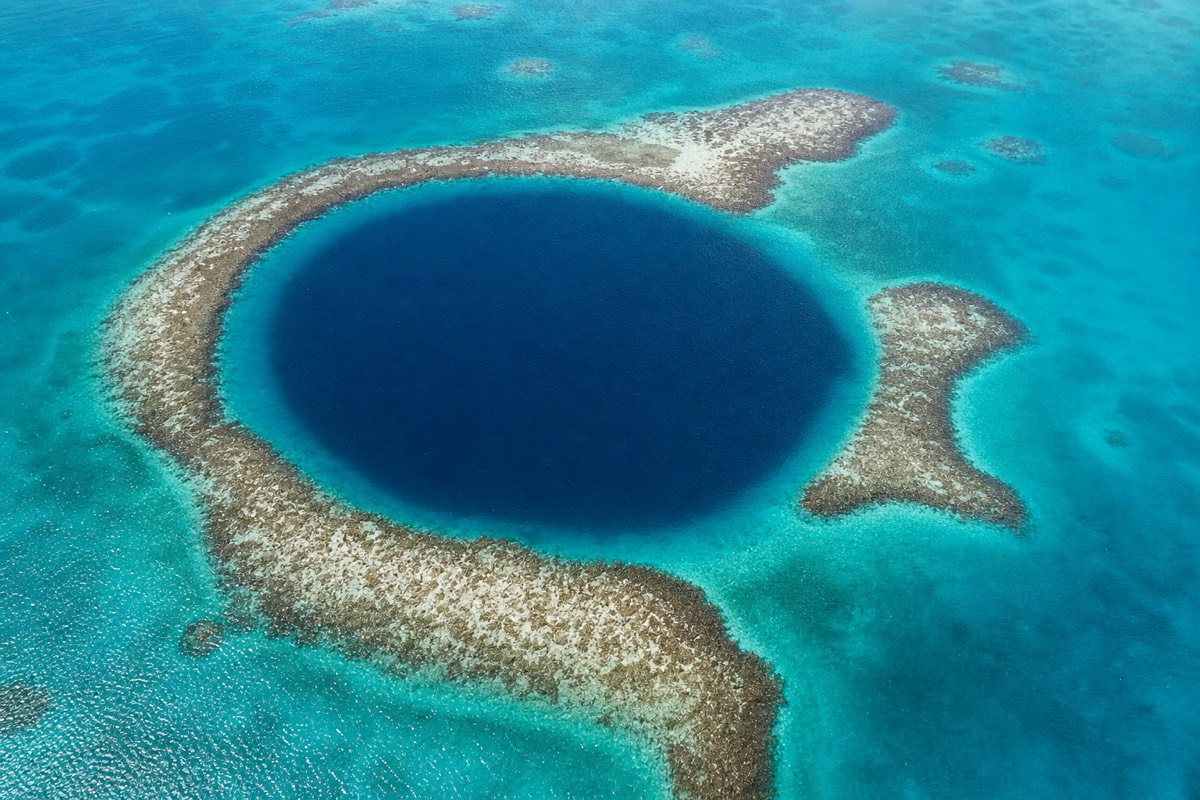
Ask ten visitors what they most want to see in Belize and the same dark circle comes up again and again. It is on the tourism posters, the beer labels and every travel list ever written about the country. Then the practical question arrives, usually a few weeks before the flight: can you actually snorkel it?
The straight answer costs us bookings and we are giving it anyway, because a wasted day in Belize is worse than a lost sale. Here is what the sinkhole is, what happens on the boats that go there, what a snorkeler genuinely gets out of the day, and the reef that is almost certainly a better use of your time.
The Blue Hole in depth, and where a snorkeler actually fits
Dimensions of the sinkhole and the protected status of Half Moon Caye are drawn from the official UNESCO World Heritage listing and the Belize Audubon Society, which manages the caye. The depth scale compares the sinkhole floor with the standard recreational scuba limit and the few feet a snorkeler works in. Trip lengths and prices are a recent snapshot, so check any live listing before booking.
Can you snorkel the Great Blue Hole?
Not in any meaningful sense. The Great Blue Hole is a deep sinkhole with vertical walls that fall away far below the reach of daylight, so a snorkeler floating on the surface sees flat dark blue and nothing else. It is a technical dive site. Snorkelers on those trips swim the shallow reef elsewhere on the atoll instead.
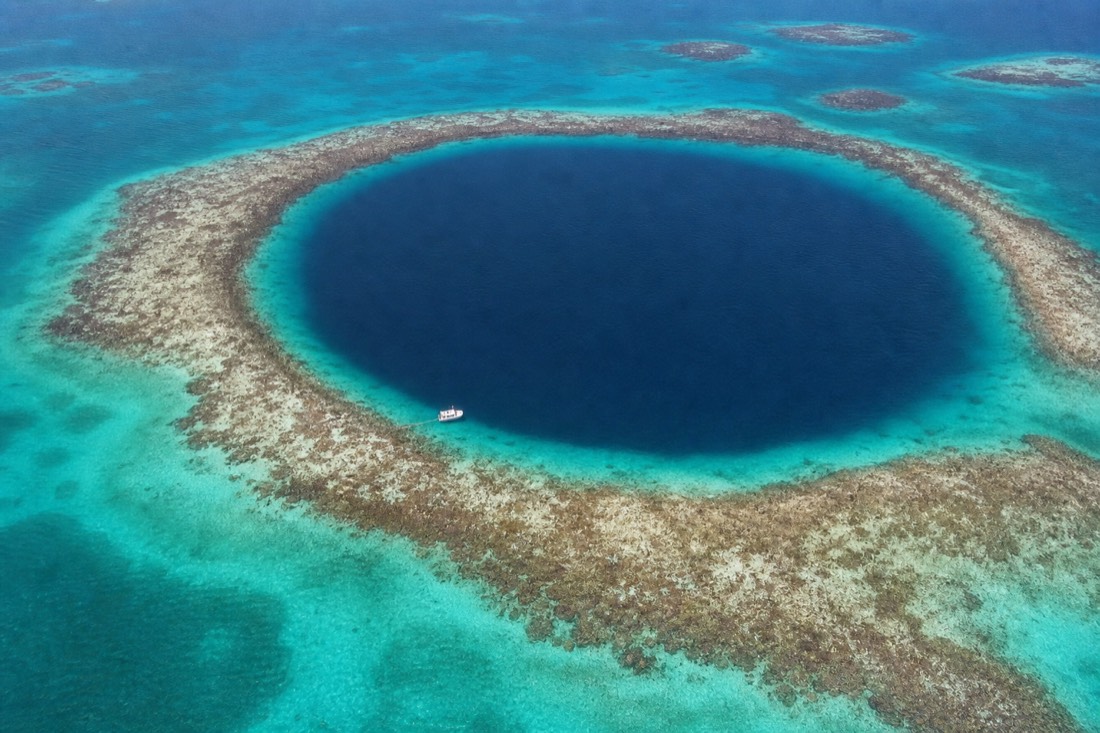
The confusion is understandable, because the marketing rarely spells it out. Trips are sold as "Blue Hole day trips" and they carry both divers and snorkelers on the same boat. The divers get the sinkhole. The snorkelers get the two other stops on the itinerary, which are genuinely good but are not the thing on the poster.
Think of it the way you would think of a canyon. Standing on the rim gives you the view. The hole gives divers a wall covered in stalactites at forty meters down, in water so deep and still that the whole appeal is the geology rather than the fish. There is no shallow shelf inside the rim for a snorkeler to work along. Once you understand that, the rest of the planning gets easy.
| The three stops on a Lighthouse Reef day | What it actually is | Snorkeler's verdict |
|---|---|---|
| The sinkhole itself | A roughly 300 meter wide, 124 meter deep flooded cave with sheer walls | Nothing visible from the surface. Divers only |
| Half Moon Caye reef flats | Shallow coral and sand off a protected island with a seabird colony | The real snorkel stop of the day, plus a walk ashore |
| The atoll rim shallows, often called The Aquarium | A shallow coral area on the inside of the atoll rim | Good clear shallow snorkeling, comparable to the barrier reef |
What is the sinkhole, and why is the famous view always from the air?
Lighthouse Reef Atoll is a ring of shallow reef sitting well offshore of the barrier reef, and the sinkhole is a collapsed limestone cave system near its center. Its circular shape and the sharp color break between shallow turquoise and near-black water only read as a shape from several hundred feet up, which is why every photograph is aerial.
The geology is the interesting part. During the last ice age, sea levels were far lower and this was dry limestone country riddled with caves. When the ice melted and the sea rose, the caves flooded and the roof of one of them fell in, leaving a near-perfect circle of deep water surrounded by reef that kept growing at the shallower depths around it. Divers still find stalactites on the walls, formed when the cave was dry air.
It is one of the seven protected areas bundled into the UNESCO World Heritage listing for the reef system, registered as Blue Hole Natural Monument. That protection is why the boat traffic is managed and why there is a ranger presence out on the atoll at all. It also means fees, which we come back to below.
None of that changes what happens at the surface. The color break your eye is looking for from a plane is invisible from a boat deck, because at water level you are looking across the surface rather than down through it. People are frequently disappointed by this and they should not be, because they were never told.
What do snorkelers actually see at Half Moon Caye?
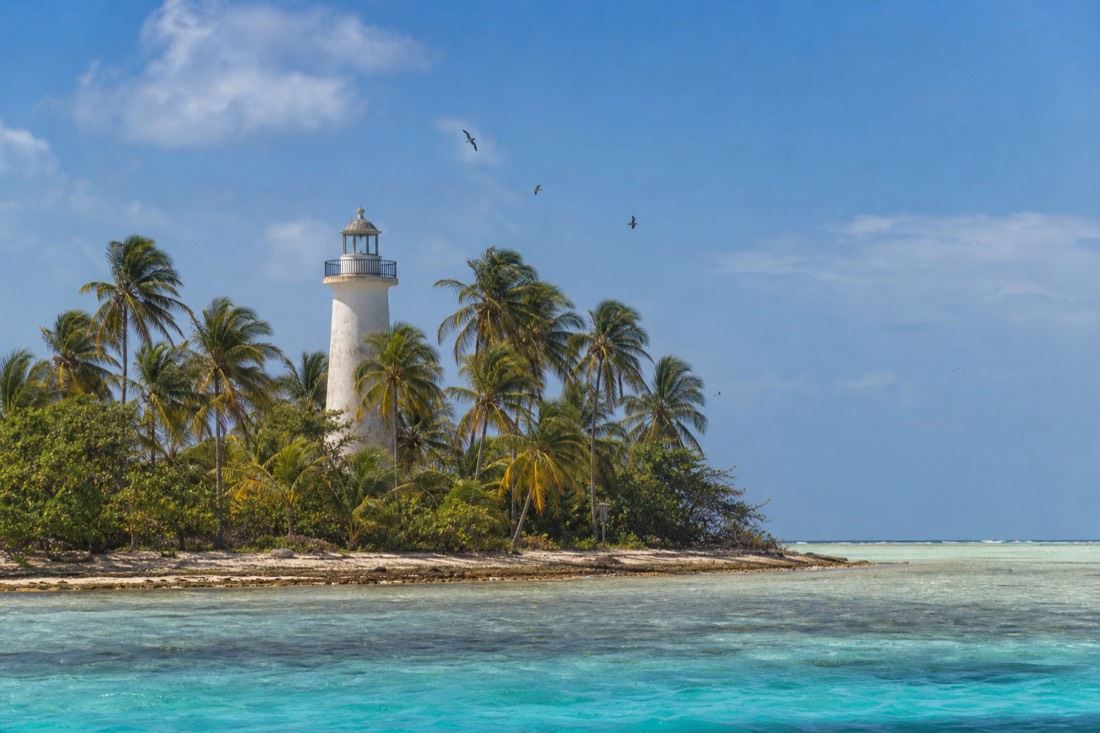
Half Moon Caye Natural Monument is the payoff stop of the day. The reef flats off the island are shallow, clear and lightly visited, and ashore there is a raised observation platform looking into a nesting colony of red-footed boobies. It has been protected since 1928, making it the oldest protected wildlife site in Belize.
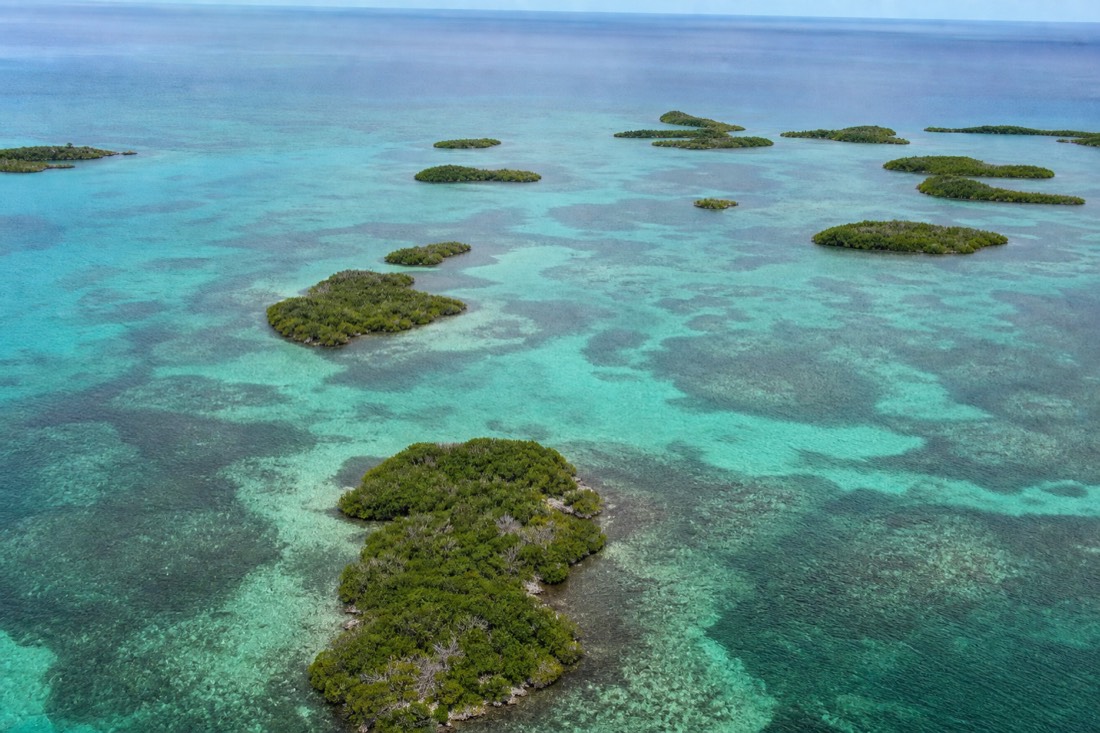
The island is small, low and covered in littoral forest, and the colony sits in the canopy of that forest. A wooden platform lifts you to eye level with the nests, which is an odd and memorable thing after a morning on a boat. Magnificent frigatebirds harass the boobies overhead. The site is managed by the Belize Audubon Society, which runs the ranger station and collects the entrance fee.
In the water, expect shallow coral and sand, healthy fish life and the calm that comes from being fifty miles from anything. What you should not expect is coral or wildlife dramatically better than the barrier reef. There are no nurse sharks lining up under the boat here, no tarpon feeding, no manatee search. It is quiet reef in a beautiful place, and quiet is exactly the point for some travelers and a letdown for others.
| Protected area on Lighthouse Reef | Managed by | Status | What visitors do |
|---|---|---|---|
| Blue Hole Natural Monument | Belize Audubon Society | Part of the World Heritage listing | Diving only, with a park fee per person |
| Half Moon Caye Natural Monument | Belize Audubon Society | Protected since 1928, part of the World Heritage listing | Snorkeling, the booby colony platform, ranger station and picnic area |
| The wider atoll rim | Managed within the same reserve system | Protected reef | Shallow snorkeling at operator-chosen anchor points |
How long is the day, and what does it cost you in hours?
Time is the real price of this trip. Lighthouse Reef sits far offshore of the barrier reef, so boats leave early, spend several hours crossing open water in each direction, and return late. It is sold as a full-day departure or as part of an overnight, and it is not something you fit around anything else.
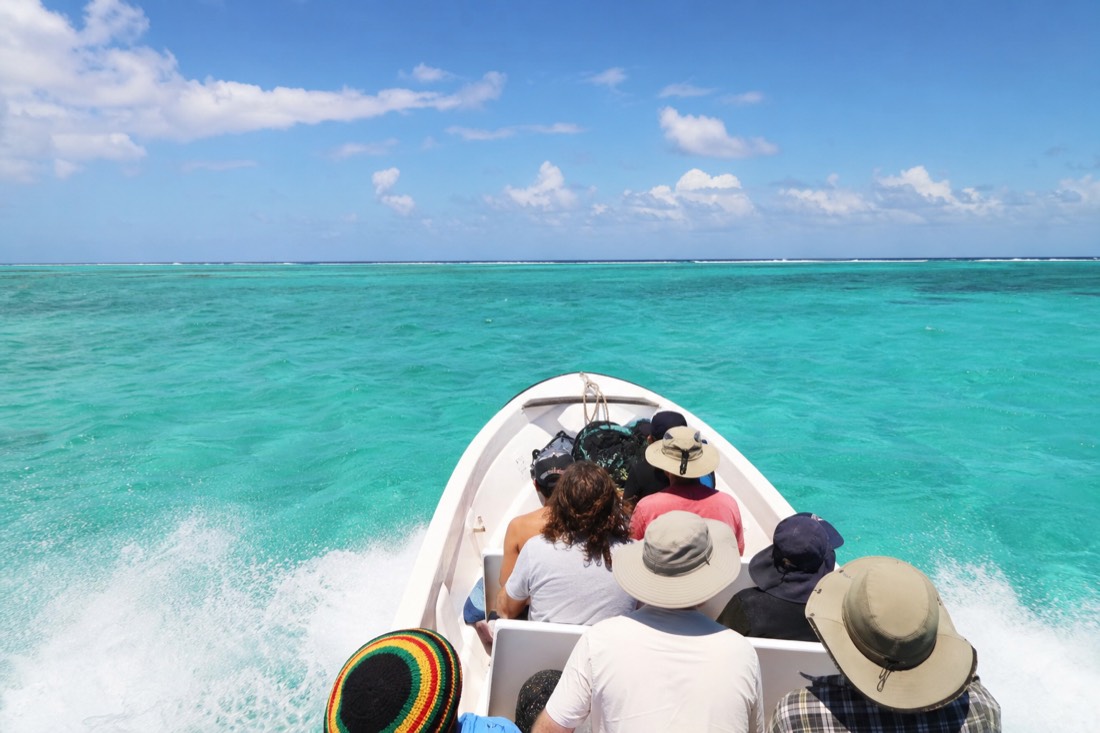
Departures run from Belize City and from the northern cayes, and the crossing is genuinely open ocean rather than the sheltered water inside the reef. That has three consequences worth planning around. The ride is bumpier than anything on a barrier reef day, so anyone prone to seasickness should take something before boarding rather than after. Trips are cancelled for weather far more often than inshore trips, because the operator is making a judgment about open water rather than a lagoon. And the sheer length of the day means your actual time in the water is a small fraction of it.
Compare that with a normal reef day. A boat out of Caye Caulker leaves around nine and is back by three, with the reef a mile from the dock and multiple stops packed into the middle. The math on in-water minutes per hour of your holiday is not close.
| Factor | Lighthouse Reef day | Barrier reef day from the cayes |
|---|---|---|
| Travel to the first stop | Several hours of open-water crossing | Minutes from the dock |
| Snorkel stops | Two, while divers do the sinkhole | Four to seven on the shared itineraries |
| Sea conditions | Open ocean, noticeably rougher | Mostly inside the reef, sheltered |
| Weather cancellations | Common in windy periods | Less frequent, and rebooked more easily |
| Headline wildlife | Seabird colony, quiet reef | Nurse sharks, rays, turtles, seasonal manatees |
| Typical shared price | Well above a standard reef day | Around $110 to $125 per person |
| Best for | Divers, birders, repeat visitors | Almost everyone else |
Who should skip the Blue Hole trip entirely?
Anyone whose main goal is snorkeling, anyone with a short trip, anyone who gets seasick, and families with young children. Those travelers get more water time, more wildlife and a far better ratio of fun to boat hours from a standard reef day at Hol Chan Marine Reserve and the coral gardens near the northern cayes.
We say this to people every week. If you have four nights in Belize and one free day for the water, spending it crossing open ocean to look at a dark circle from a boat deck is a poor trade. The reserve twenty minutes from San Pedro is one of the best-managed shallow snorkel sites in the Caribbean, and the Belize Fisheries Department keeps it that way. The Hol Chan and Shark Ray Alley site guide covers what that day actually looks like.
There are people the trip suits well, and we are not talking anyone out of it. Certified divers, obviously. Serious birders, because the booby colony is a genuine draw. Repeat visitors who have already done the barrier reef and want somewhere new. Photographers who intend to pair the boat day with a flight. If none of those describe you, the honest recommendation is to spend the money elsewhere.
There is a version of this decision that has nothing to do with the Blue Hole at all, which is whether the snorkeling itself justifies the trip. It does, for the great majority of people who try it here, and we have set out the case and the caveats in an honest look at whether snorkeling in Belize lives up to the hype. The country's reputation was not built on one sinkhole. It was built on shallow, warm, clear water full of animals that are used to people, reachable within half an hour of two small islands, which is a rarer combination than the famous circle suggests.
| Traveler | Verdict | Why |
|---|---|---|
| Certified diver | Go | The sinkhole is the entire reason the trip exists |
| Snorkeler on a first Belize trip | Skip | Better reef, more wildlife and far less boat time near the cayes |
| Birder | Go | The red-footed booby colony at Half Moon Caye is unusual and close-up |
| Family with young children | Skip | The crossing is long and rough for small passengers |
| Prone to seasickness | Skip, or fly instead | Open-water crossing in both directions with no way to shorten it |
| Repeat visitor who has done Hol Chan | Consider | Somewhere genuinely different, if you accept the time cost |
| Short trip, one water day | Skip | One day buys far more on the barrier reef |
What is the better snorkel day if you stay on the barrier reef?
Shark Ray Alley and the reserve next to it. A shared reef day from the northern cayes puts you in shallow water with nurse sharks, southern stingrays, turtles and dense reef fish, at four to seven stops, for around a hundred dollars, and gets you back to the island with the afternoon still ahead of you.
The nurse shark stop is the one people talk about afterward. Sharks gather around the boats in chest-deep water because fishermen once cleaned their catch there, and the association held. Snorkelers get in among them with a guide, and the animals are entirely uninterested in people. It is the closest thing to a guaranteed wildlife encounter anywhere in Belize, which is the exact opposite of the Blue Hole trip's proposition.
From Caye Caulker, the seven-stop reef circuit out of Caye Caulker runs six hours with lunch on board and marine park fees included. From Ambergris Caye, the four-stop day from San Pedro adds a manatee search in the North Channel and free time ashore on Caye Caulker. Groups who want the boat to themselves and the itinerary rearranged around them take the private customizable reef charter instead, which carries the highest rating of the trips listed on Belize Snorkeling Tours.
Any of those give a snorkeler more in six hours than a Lighthouse Reef day gives in twelve. The wider case for the reef, including how the atolls fit into it, is in our overview of the structure of the Belize Barrier Reef.
Since the question comes up constantly, here is the plain version for the trips shown on this page. None of them goes to Lighthouse Reef, none passes the sinkhole, and none can be persuaded to. They are barrier reef days working the water between San Pedro and Caye Caulker, which is exactly why they are cheap, short and reliable.
| Trip on this page | Departs from | Stops | Hours and price | Goes to Lighthouse Reef? |
|---|---|---|---|---|
| Seven-stop reef circuit | Caye Caulker | Hol Chan, Shark Ray Alley, a shipwreck, seahorse and coral stops | 6 hours, around $110 per person | No |
| Four-stop day with lunch | San Pedro | Hol Chan, Shark Ray Alley, Coral Gardens, North Channel manatee search, Caye Caulker | 8 hours, around $125 per person | No |
| Private customizable reef day | San Pedro | Built around Hol Chan, Shark Ray Alley, the Conch Graveyard and the Split | 7 hours, around $675 for the boat | No |
Is a scenic flight over Turneffe Atoll and the Blue Hole a better option?
For most people who want the postcard image, yes. Small-plane flights out of Belize City and San Pedro circle the sinkhole from the air, passing over Turneffe Atoll and the outer reef on the way, and deliver the view everyone has in their head in a fraction of the time a boat day consumes.
The flight is the only way to see the shape. It also solves the seasickness problem, works in conditions that would cancel a boat, and can be booked as a morning add-on rather than a whole day. What it does not give you is water, so a common pattern among people who want both is to fly one morning and take a normal reef day another. Two half-days, both delivering what they promise.
The atolls themselves are worth understanding before you decide, because Belize is unusual in having three of the four true Caribbean atolls. Each is a separate ring-shaped structure with its own lagoon rather than a piece of the barrier reef, which is why they sit so far out and why day-tripping to them costs so much time.
Laid out side by side, the three ways of encountering the sinkhole stop competing with each other. They are different products that happen to share a name, and most disappointment comes from booking one while expecting another.
| Option | What you actually get | What it costs in time | Who it suits |
|---|---|---|---|
| Dive the sinkhole | The wall, the stalactites and the depth, on a certified deep dive | A full day offshore | Certified divers with deep-dive experience |
| Snorkel the atoll on the same boat | Half Moon Caye reef flats, the atoll rim shallows and the booby colony | The same full day, most of it traveling | Birders, repeat visitors, non-diving partners of divers |
| Fly over it | The circular view from the postcards, plus Turneffe Atoll on the way | Part of a morning | Anyone who wants the image rather than the water |
| Skip it and snorkel the barrier reef | Nurse sharks, rays, turtles, four to seven stops close to shore | Six to eight hours, dock to dock | Most first-time visitors holding a mask |
What should you bring on a long open-water day?
Pack for exposure, not for swimming. A full day on an open boat far offshore means sun from every angle including reflection, wind that hides how much you are burning, salt spray on everything, and no shop to buy what you forgot. Seasickness tablets, reef-safe sunscreen, a rash guard, a dry bag and cash for park fees cover most of it.
Every operator listing we work with excludes the same handful of items: personal towels, high-SPF reef-safe sunscreen, gratuities and travel insurance. Those exclusions are not fine print to skim, they are a packing list. On a trip this long the rash guard matters more than the sunscreen, because it does not wash off after two hours in salt water and it does not need reapplying at the exact moment you are in the water.
Cash deserves its own mention. Park fees on protected sites are collected on the day on many charters, and ranger stations offshore are not set up for card payments. Small US or Belize notes solve that. Our first-timer's rundown of what to pack for a Belize snorkel day goes through the rest, including what to leave at the hotel.
| What to bring | Why it matters on this specific trip |
|---|---|
| Seasickness tablets, taken before boarding | The crossing is open ocean and there is no turning back early |
| Long-sleeved rash guard | Hours of sun on a boat deck plus reflection off the water |
| Reef-safe sunscreen | Excluded from every listing, and required behavior inside protected reserves |
| Dry bag | Open boats, spray, and no dry storage for phones |
| Small notes in cash | Park fees and ranger stations rarely take cards |
| Your own towel | Explicitly not included on the listings |
| Refillable water | Long day, real dehydration risk in wind and sun |
How do you book a Lighthouse Reef trip if you still want to go?
Book it as a named Blue Hole or Lighthouse Reef departure, not as a general snorkel tour. Standard reef trips from San Pedro and Caye Caulker do not go anywhere near the atoll, and no amount of asking on the day will redirect a boat that is scheduled for Hol Chan.
The practical steps are the same wherever you are staying. Look for a dedicated full-day Lighthouse Reef departure that states its snorkel stops rather than only its dive stops, ask directly whether snorkelers are taken to Half Moon Caye and the shallow rim, and confirm what happens if the trip is cancelled for weather. That last point matters more than usual here, because cancellation rates offshore are meaningfully higher and you want to know whether you are being rebooked or refunded before you hand over money.
Build in a spare day either side too. A trip that runs only in settled conditions is a poor thing to schedule for the morning before a flight home. If your dates are tight, check the seasonal picture first in our month-by-month look at when Belize water is calmest and clearest, then decide whether the offshore day is realistic at all.
And if reading all this has moved you away from the idea, that was the honest outcome rather than a failure. Plenty of visitors arrive fixed on one famous name and leave talking about a shark stop twenty minutes from their hotel. Our ranking of the country's best snorkeling spots in Belize puts the sites side by side, and the sinkhole is not near the top of it for anyone holding a mask rather than a regulator.