Hol Chan Marine Reserve and Shark Ray Alley: The Complete Snorkeling Guide
The engine drops to an idle and the water under the hull splits along a hard line, milky green over the seagrass on one side, deep blue on the other. That line is the cut. Twenty minutes further south, in water shallow enough to stand in, nurse sharks come to the boat before anyone has finished spitting in a mask.
Booking details checked 11 September 2026. Older price examples below are planning estimates, not current quotes. Use the provider for your date and full group total; sightings and weather are never guaranteed.
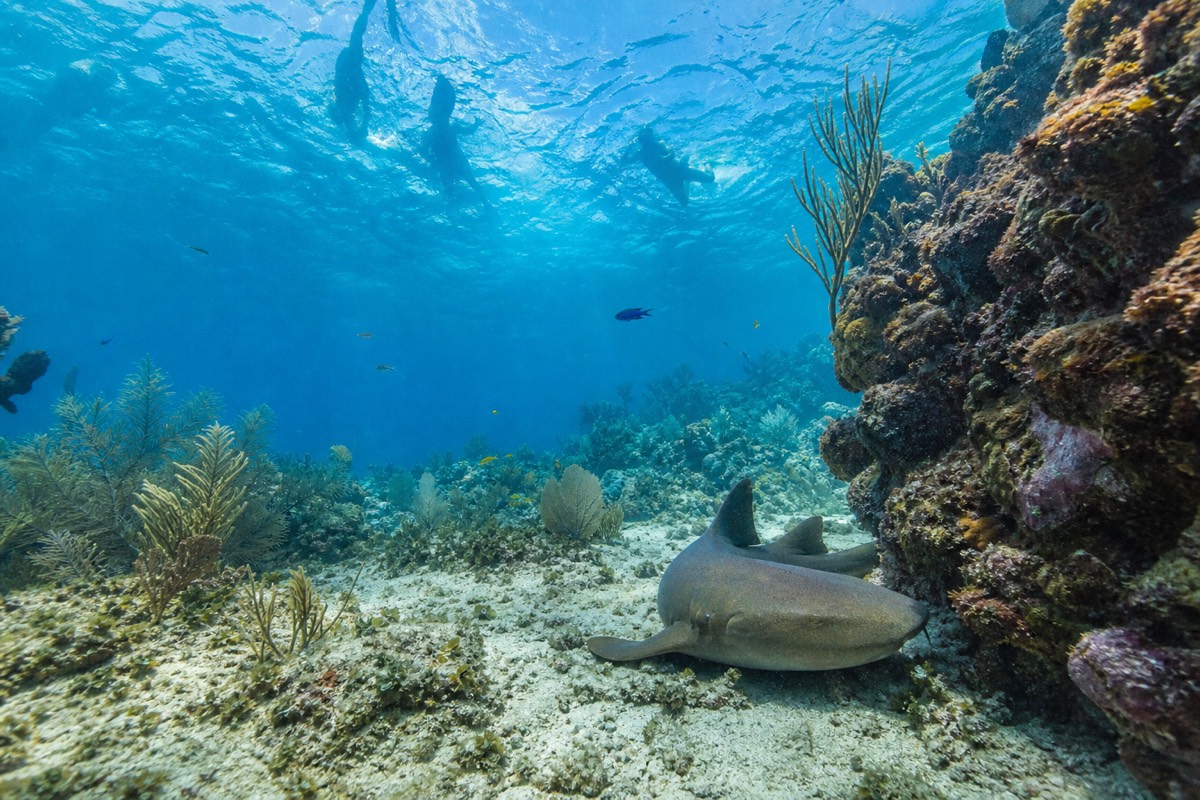
The engine drops to an idle about twenty minutes out of San Pedro and the water under the hull splits along a hard line, milky green over the seagrass on one side, deep blue on the other. That line is the cut. It is a gap in the reef crest barely wider than a village street, and it is the reason this piece of coastline became the first stretch of sea Belize ever bothered to protect.
Hol Chan and Shark Ray Alley get sold as a pair because they work as a pair. One is a channel where moving water gathers big fish against a coral wall. The other is a shallow sand flat a short run further south where nurse sharks and southern stingrays come to the boat instead of the other way around. Nearly every day trip out of either island base runs both in the same morning, which is why the two names appear together on almost every listing you will read.
What follows is the detail those listings skip: what each stop actually holds, what the reserve charges and who collects it, how the pair is sequenced across a real itinerary, when the water is worth the crossing, and who honestly gets more out of the shallow stops than the famous channel.
Hol Chan and Shark Ray Alley at a glance
Reserve status and management come from the Belize Fisheries Department and the site's World Heritage listing. Depths are typical working ranges reported by the operators running these stops, not survey figures, and the fee and prices are a recent snapshot that moves with season and group size, so read the live listing before you budget.
What is Hol Chan Marine Reserve?
Hol Chan Marine Reserve protects a natural channel through the Belize Barrier Reef off the southern tip of Ambergris Caye, roughly four miles from San Pedro Town. Declared in 1987, it was the first marine reserve established in Belize, and it now covers five management zones spanning reef, seagrass, mangrove and shallow patch coral under the Belize Fisheries Department.
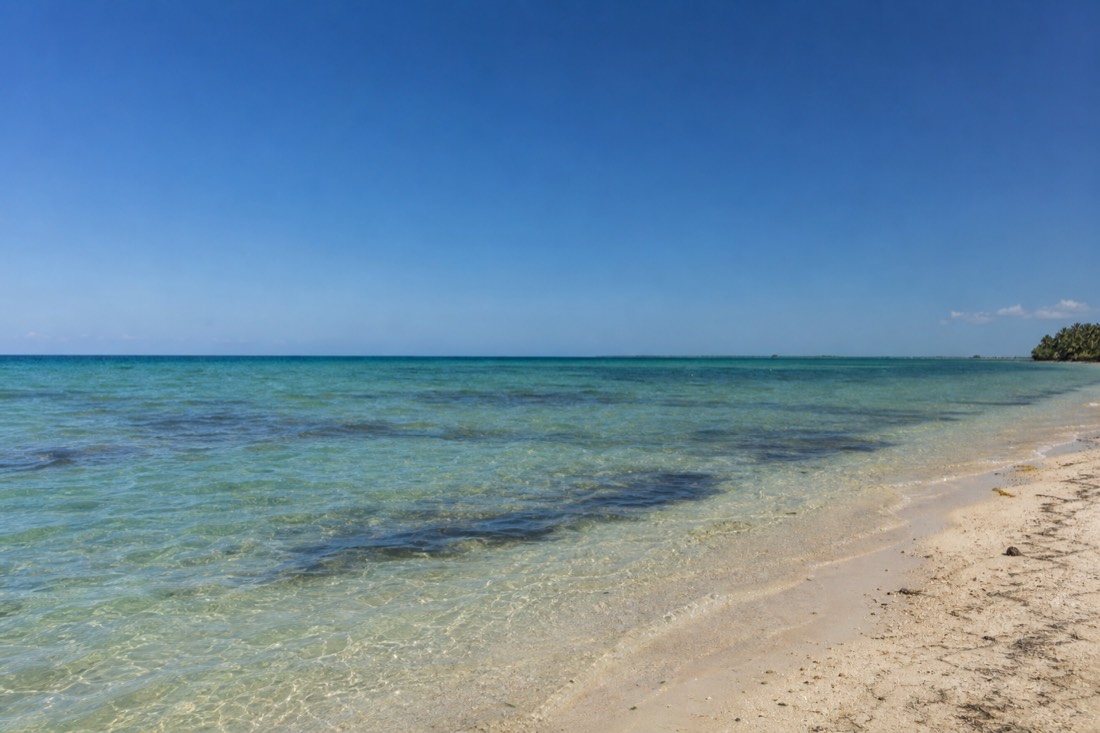
The name is Maya for "little channel," which is an unglamorous description of an unusual piece of geology. The barrier reef here runs as a near-continuous crest, and where a gap breaks through it, water moves. Tide pushes in over the flats and drains back out through the same gap twice a day, and every animal that feeds on what a current carries has learned where to wait. That is the entire attraction in one sentence. The reserve was not drawn around pretty coral; it was drawn around a bottleneck.
Protection since 1987 also explains the size of what you see. Fish that are not speared grow old, and old fish in the Caribbean get large and indifferent. Groupers park under ledges and let a line of snorkelers pass overhead without moving. That indifference is not tameness, it is decades of nobody hunting them, and it is the single biggest difference between this site and an unprotected reef an hour down the coast. The whole reserve system it belongs to has carried World Heritage listing since 1996.
The reserve has also grown. It began as the reef, seagrass and mangrove around the cut, absorbed the shark flat at the end of the 1990s, and took in the shallow patch reef north of town in the middle of the 2010s. That is why a single ticket can cover stops that sit an hour of boat time apart.
| Zone | What it protects | Depth you snorkel in | What a snorkeler notices |
|---|---|---|---|
| The reef zone, the original cut | A natural break through the reef crest | Float above roughly 9 m | Current, coral walls, the largest fish of the day |
| The seagrass zone | Turtle grass flats inside the reef line | Roughly 3 to 4 m | Green turtles grazing, conch, rays on open sand |
| The mangrove zone | Nursery habitat along the shoreline | Shallow, often under 2 m | Glass-calm water, juvenile fish in the root tangle |
| Shark Ray Alley | A shallow sand flat south of Ambergris Caye | Chest to head deep | Nurse sharks and southern stingrays circling the boat |
| Mexico Rocks and Boca Ciega | Shallow patch coral north of San Pedro Town | Waist to chest deep | Isolated coral heads, bright small fish, no current |
Only the first two zones and the shark flat appear on a standard half-day itinerary. If the shallow patch reef north of town appeals more than the channel, and for a lot of first-timers it does, check the route before booking, because plenty of boats never head north at all. Our guide to snorkeling out of San Pedro on Ambergris Caye lays out which departures cover which end of the island.
What do you actually see in the Hol Chan cut?
The channel stacks fish by size and habit rather than scattering them. Expect schooling blue tang, snapper and jacks in the moving water, large groupers and green moray eels wedged into the coral walls, parrotfish working the reef flat, and barracuda hanging motionless in the blue. Green turtles and southern stingrays sit on the seagrass either side of the cut.
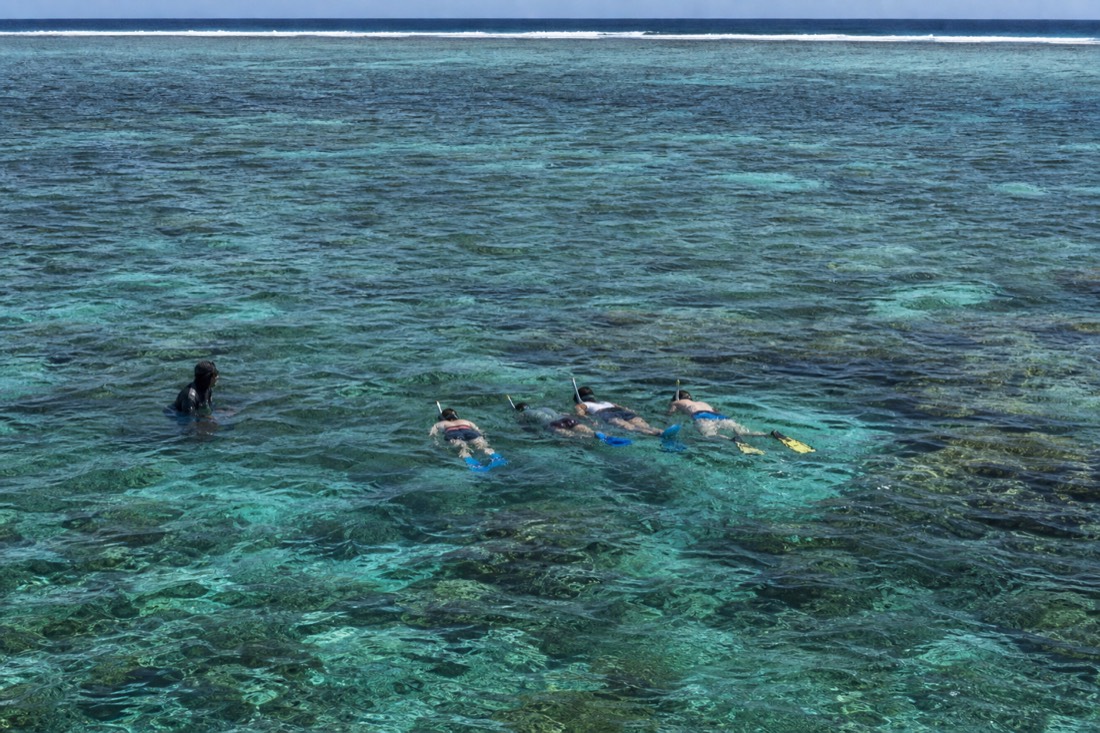
The sequence is usually the same. A guide drops the group at the upcurrent end and everyone drifts, which means the swim costs almost nothing in effort and you cover a lot of channel. The coral walls on either side rise close enough to the surface that you can pick out individual polyps in good light, then the seabed falls away underneath and the colour goes from turquoise to that flat mineral blue that reads as deep even when you cannot judge the distance.
What surprises people is the density rather than the variety. A single pass can put you over several hundred fish at once when the tide is running, and the schooling species move as one sheet that opens and closes around you. Isolated animals are the ones you remember: a green moray with its mouth working, a nurse shark asleep under a ledge on its own time rather than in the crowd at the flat, a spotted eagle ray crossing the channel with the flight pattern that gives it the name.
| What you are likely to see | Where in the channel | How reliably |
|---|---|---|
| Blue tang, snapper, jacks in schools | Mid-water, in the current | Nearly every trip |
| Large grouper | Parked under coral ledges on the walls | Nearly every trip |
| Green moray eels | Wedged in crevices, head out | Common, worth asking the guide to point out |
| Parrotfish and angelfish | Over the reef flat either side | Nearly every trip |
| Barracuda | Hanging still in open blue water | Common, and harmless at this distance |
| Green sea turtles | Grazing the seagrass beds | Frequent, never promised |
| Spotted eagle rays | Crossing the channel, usually deep | Occasional, a genuine piece of luck |
| Manatees | Not in the cut, in the channels north of it | Rare, and a separate stop on some itineraries |
Guides do not feed the fish inside the reef zone, so nothing here is performing. The animals are simply used to a line of silhouettes passing overhead twice a morning. That also means an early boat and a late boat see roughly the same reef, unlike the shark flat, where timing changes the experience considerably.
What is Shark Ray Alley and why do the sharks gather there?
Shark Ray Alley is a shallow sand flat inside the same reserve, chest to head deep, where fishermen once cleaned their catch on the way home. Nurse sharks and southern stingrays learned to gather for the scraps and never stopped. Boats cut their engines, snorkelers slide in, and the animals come to the hull rather than being searched for.
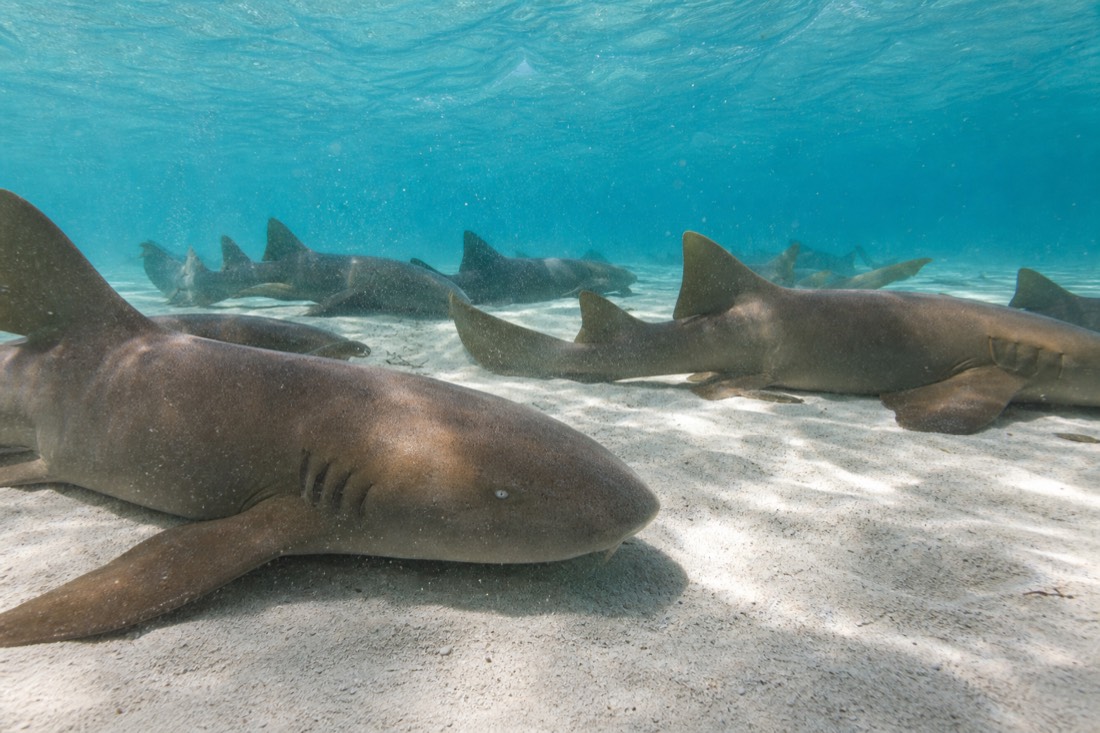
This is the encounter that sells Belize as a snorkeling destination, and it earns the reputation. Nurse sharks are bottom feeders built for suction rather than biting, with small mouths and heavy, unhurried bodies, and at this site they arrive in numbers. Several at once is normal. Operators running the flat describe individuals up to around twelve feet, which sounds alarming written down and reads very differently when one slides past your fins with the body language of a large dog that has decided you are not food.
Southern stingrays work the sand underneath them, wings rippling, and schools of jacks and snapper thicken the water in between. It is busy, noisy in the way shallow water is noisy, and short: most itineraries give the flat twenty to thirty minutes, which is about as long as anyone wants to spend standing in chest-deep water with a mask on.
Two honest notes before you book. This is a habituated site, and it is habituated because people have been in the water there for decades and some crews still put bait over the side to hold the animals near the boat. If that changes how you feel about the stop, ask your operator what they do; the ones we work with will tell you plainly. Second, the flat is small and popular. On a heavy morning several boats share it at once, and the difference between a memorable stop and a scrum is usually forty minutes of departure time. An eight o'clock start out of San Pedro tends to beat the convergence, and a private boat from Ambergris Caye can reorder the day to hit the flat first.
How much does the reserve entrance fee cost?
The Hol Chan Marine Reserve entrance fee runs to around $15 per person, collected on behalf of the Belize Fisheries Department and used to fund patrols, moorings and monitoring inside the zones. Almost every organized snorkeling trip includes it in the ticket price rather than charging it at the boat, but the inclusion is worth checking on the listing.
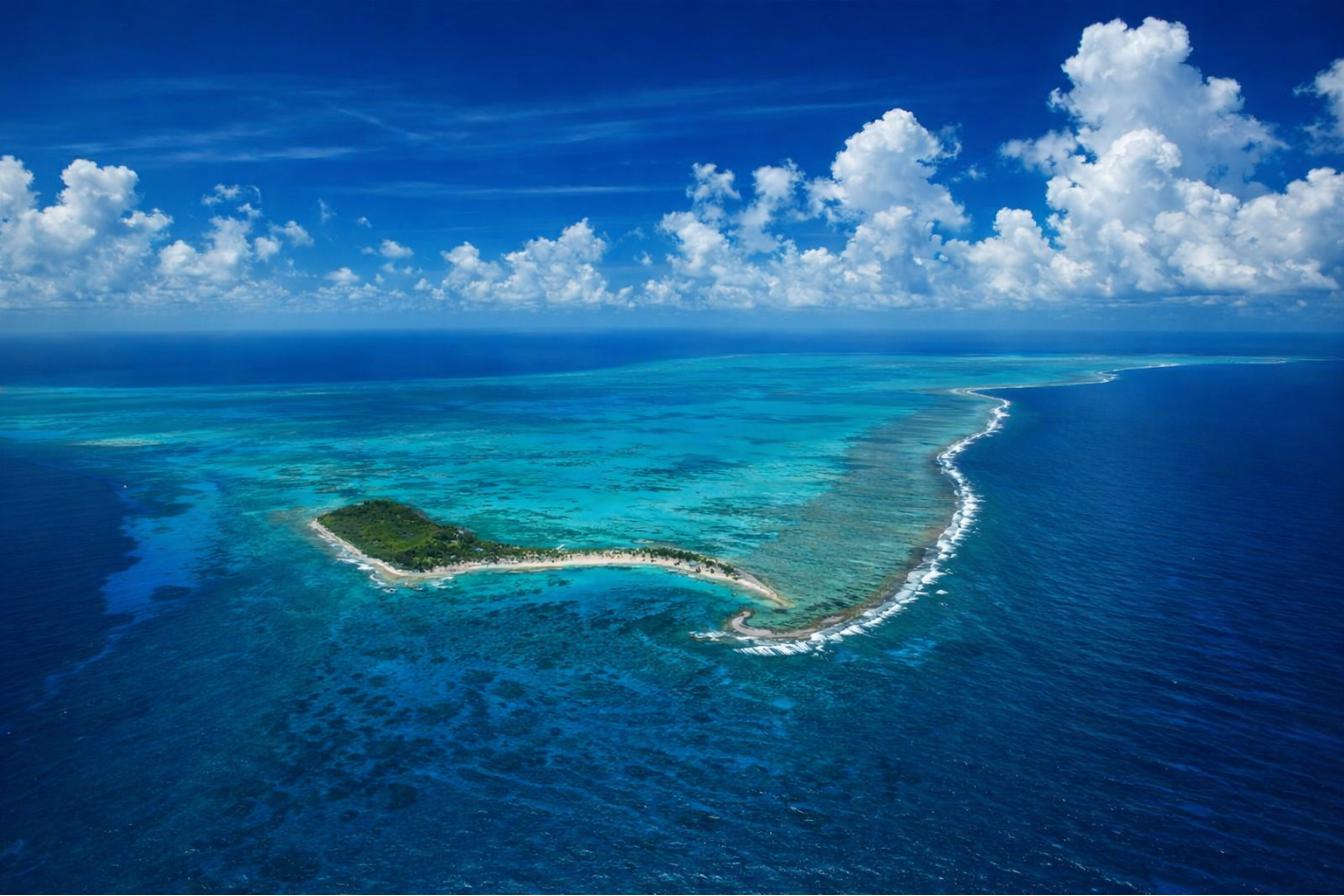
Fees are the most common source of small unpleasant surprises on a Belize snorkeling day, less because anyone is being sharp than because different stops sit under different management. The reserve fee covers the Hol Chan zones, including the shark flat. A trip that adds a stop outside those zones may carry its own charge, and southern trips out of Hopkins or Placencia fall under entirely separate reserves. Official fee schedules live with the managing bodies, and the reserve publishes its own through the Belize Fisheries Department.
| Trip | Departs from | Listed length | Fee handling on the listing | Listed from |
|---|---|---|---|---|
| San Pedro 4 stop tour with sharks and lunch | San Pedro | 8 hours | Hol Chan and Shark Ray Alley fees included | $125 per person |
| Caye Caulker 7 stop snorkeling tour | Caye Caulker | 6 hours | All marine park entrance fees included | $110 per person |
| Private Hol Chan and Shark Ray Alley tour | San Pedro, Ambergris Caye | 7 hours | Reserve fee covered, private boat | $675 for the boat |
| Caye Caulker private full-day Hol Chan tour | Caye Caulker | 6 hours | All marine park and reserve fees included | $825, up to 8 guests |
Those figures come off the operators' current listings and they move with season, group size and demand, so treat them as a starting point rather than a quote and check the live listing before you commit. The pattern to notice is that the fee is bundled on all four, which is the norm rather than a perk. If a cheaper ticket looks unusually cheap, the reserve fee is the first thing to check for.
How do tours combine both stops in one trip?
A standard morning runs the channel first and the sand flat second, then adds a shallow coral stop and lunch. The reef zone wants clear light and an incoming tide, the shark flat is less fussy, and the shallow finish gives anyone who found the current intimidating an easy last swim. Full-day boats extend the same shape with a manatee search or an afternoon on a second island.
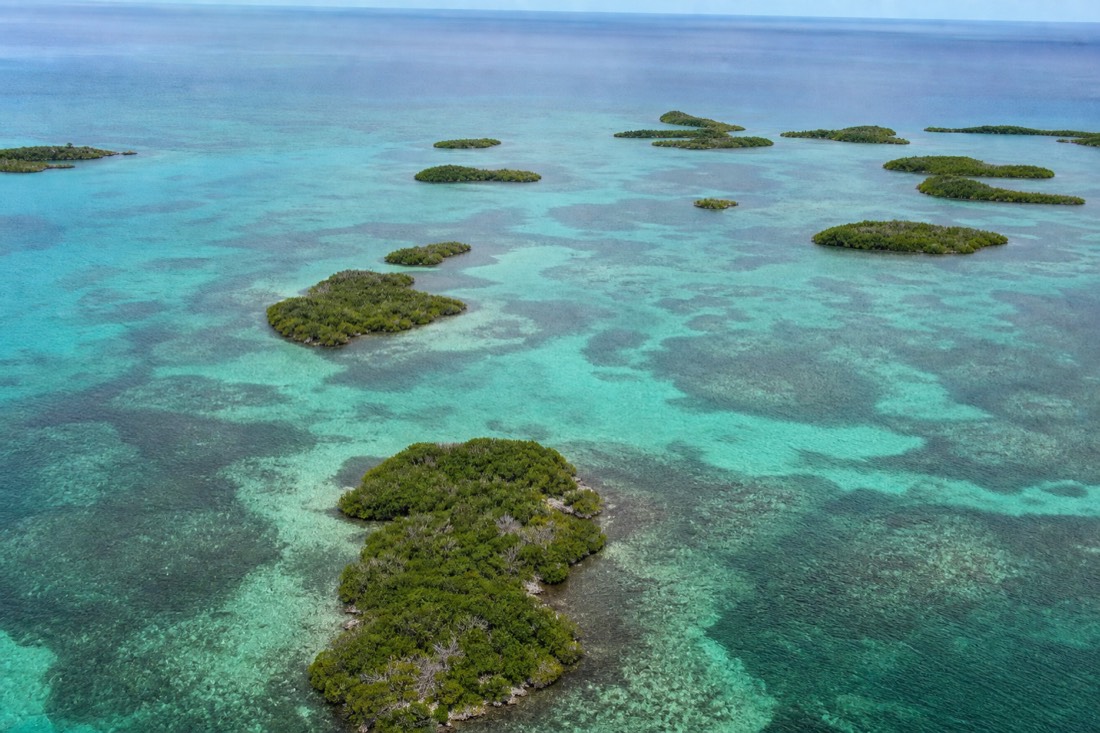
Sequence matters more than most itineraries admit. Dropping into the cut first means you meet the hardest water of the day while you are fresh and before your mask has fogged for the third time. It also means the light is high enough to reach the coral walls but not yet flattened by midday glare. Crews that reverse the order usually have a reason, often tide, and it is a fair question to ask on the dock.
The shape below is drawn from what the operators we work with publish for their own departures, not from a template. Times are the working allowances you should plan around rather than promises.
| Stage of the day | Typical clock | Time in the water | What it asks of you |
|---|---|---|---|
| Dock check-in and gear fitting | 8:00 to 8:30 am | None | Say now if you want a flotation belt |
| Run out to the reserve | 20 to 40 minutes | None | Sunscreen on before you leave the dock |
| The Hol Chan cut | Mid-morning | Around 45 to 60 minutes | Comfort in open water, a gentle drift |
| Shark Ray Alley | Late morning | Around 20 to 30 minutes | Very little, the water is shallow |
| Coral garden or shallow stop | Around midday | Around 30 to 45 minutes | Nothing, this is the easy one |
| Lunch, island stop or return | Early afternoon | Optional swim | Dry clothes if you are stopping in a village |
The two shared departures on this site show the difference a couple of hours makes. The six-hour seven-stop run from Caye Caulker keeps the day tight and adds a shipwreck and a seahorse stop, while the eight-hour four-stop day from San Pedro spends the extra time on a manatee search in the North Channel and free time on a second island. Both include the same two headline stops. Which suits you comes down to whether you want more sites or more room in the day, a trade covered further in our guide to snorkeling out of Caye Caulker.
What are the water conditions like month by month?
Visibility at the cut is best in the drier stretch from February through May, when light winds leave the water flat and clear. North winds between November and January can cut visibility and cancel crossings for a day or two at a time, and the June to November wet season brings warmer water, more rain and the real weather risk of the year.
Belize does not have a bad snorkeling season so much as a variable one. Water temperature sits in a narrow band across the year, warm enough that most people skip a wetsuit and cool enough that a rash guard earns its place against sun rather than cold. What actually changes month to month is surface conditions, and surface conditions decide two things: whether the boat goes out, and how far you can see once it stops.
| Months | Typical surface conditions | Visibility at the cut | Departure risk |
|---|---|---|---|
| February to April | Light winds, flat mornings | The clearest of the year | Low, the safest window to book tight |
| May | Warming, still mostly calm | Very good | Low, with the first afternoon rain |
| June to August | Warm, humid, short heavy showers | Good between weather systems | Moderate, storms build in the afternoon |
| September to October | Wettest stretch, highest storm risk | Variable, can drop sharply after rain | Highest of the year, keep a spare day |
| November to January | Northers, choppy for days at a time | Reduced when the wind is up | Moderate, cancellations cluster |
Two practical consequences. If your trip is short and the reef is the reason you came, book the boat day early in your stay so a cancellation leaves you a second attempt. And if you are travelling in the autumn, treat any single scheduled snorkeling day as optimistic. Our month-by-month breakdown in the best time to visit Belize for snorkeling guide goes further into how the seasons trade off against crowds and price.
One more variable worth naming, because it surprises people who have only read the brochures: sargassum. Drifting rafts of it wash onto Caribbean beaches in some years and not others, usually heaviest in spring and summer. It affects the look of a shoreline far more than it affects the reef a mile out, so a beach photograph is a poor guide to what the boat day will be like.
Who should skip the channel, and what should they do instead?
Anyone who is a weak or anxious swimmer will get more out of the shallow stops than the cut. The channel carries current and sits over deep water, which is exactly what makes it good and exactly what makes it uncomfortable for some people. The shark flat, the coral gardens and the patch reef north of San Pedro deliver the wildlife without the open-water feeling.
Being honest about this is not a knock on the site. It is that the two headline stops make very different demands, and reading them as a single experience sets people up badly. The flat is stand-up shallow. The cut is a drift over a seabed you cannot touch. A confident swimmer barely registers the difference; a nervous one registers nothing else.
The crews on the trips listed here carry flotation belts and pool noodles and hand them out without ceremony, and a guide will stay with a nervous swimmer if you say so at the dock rather than at the moment of getting in. That one sentence on the dock changes the day more than any piece of gear you can buy. For a fuller read on what suits a first-timer, our take on whether Belize snorkeling works for beginners covers the same ground from the nervous swimmer's side, and the packing notes in what to bring on your first Belize snorkeling trip cover the kit worth carrying yourself.
| If this is you | Best stop of the day | What to ask for at the dock |
|---|---|---|
| Confident open-water swimmer | The Hol Chan cut, no question | A drift start at the upcurrent end |
| Comfortable but out of practice | Cut with a flotation belt, then the flat | A belt, and a guide's eye on the group |
| Nervous, or first time in a mask | Shark Ray Alley and the shallow coral | A noodle and permission to sit out the cut |
| Travelling with young children | Shallow patch reef, then the flat | Child-sized mask, checked before departure |
| Wants the sharks and nothing else | A shorter trip, or a private charter | A route that puts the flat first |
The six trips featured on Belize Snorkeling Tours all sit somewhere on that ladder, from a shared six-hour run to a private charter that can be rebuilt around what your group wants. If the reserve is only one part of a longer plan, the wider ranking in our guide to the best places to snorkel in Belize puts these two stops in context against the atolls and the southern cayes, and the barrier reef guide explains the structure the whole system hangs off.
Is the reserve worth it if you have snorkeled elsewhere in the Caribbean?
Yes, for two specific reasons rather than general beauty. The fish are unusually large and unusually calm after nearly four decades of protection, and the shark flat delivers a close encounter with big animals in water shallow enough to stand in, which very few sites anywhere can offer without a cage, a chum line or a certification card.
Experienced snorkelers sometimes arrive expecting an untouched wilderness and find a well-run, well-visited marine park instead, complete with mooring buoys, patrol boats and other groups in the water. That is what functioning protection looks like, and it is the reason the coral and the fish are still there. The comparison worth making is not against an imaginary empty reef; it is against the unmanaged sites down the coast where the big grouper stopped showing up a generation ago.
The other thing that survives repeat visits is the geology. Most Caribbean snorkeling puts you over a reef flat. Here you spend an hour over an actual channel, with a wall on either side and open blue underneath, and the animals arrange themselves around that structure in a way a flat simply cannot reproduce. It is a different shape of swim, and that is what people come back for. Belize itself sits at Level 2 on the US State Department advisory scale, the same tier as much of western Europe, with a separate higher rating for one district of Belize City that no snorkeling day passes through. Our notes on safety on a Belize snorkeling trip go through what that means in practice on the islands.