Belize Snorkeling Excursions for Cruise Passengers
From the top deck it becomes obvious fast: the ship is not pulling alongside anything. Belize City sits behind a long shallow shelf, so the anchor goes down a few miles out and orange tenders start shuttling. That one detail reshapes every snorkeling plan you made on the plane, and almost nobody tells you before you board.
Booking details checked 11 September 2026. Older price examples below are planning estimates, not current quotes. Use the provider for your date and full group total; sightings and weather are never guaranteed.
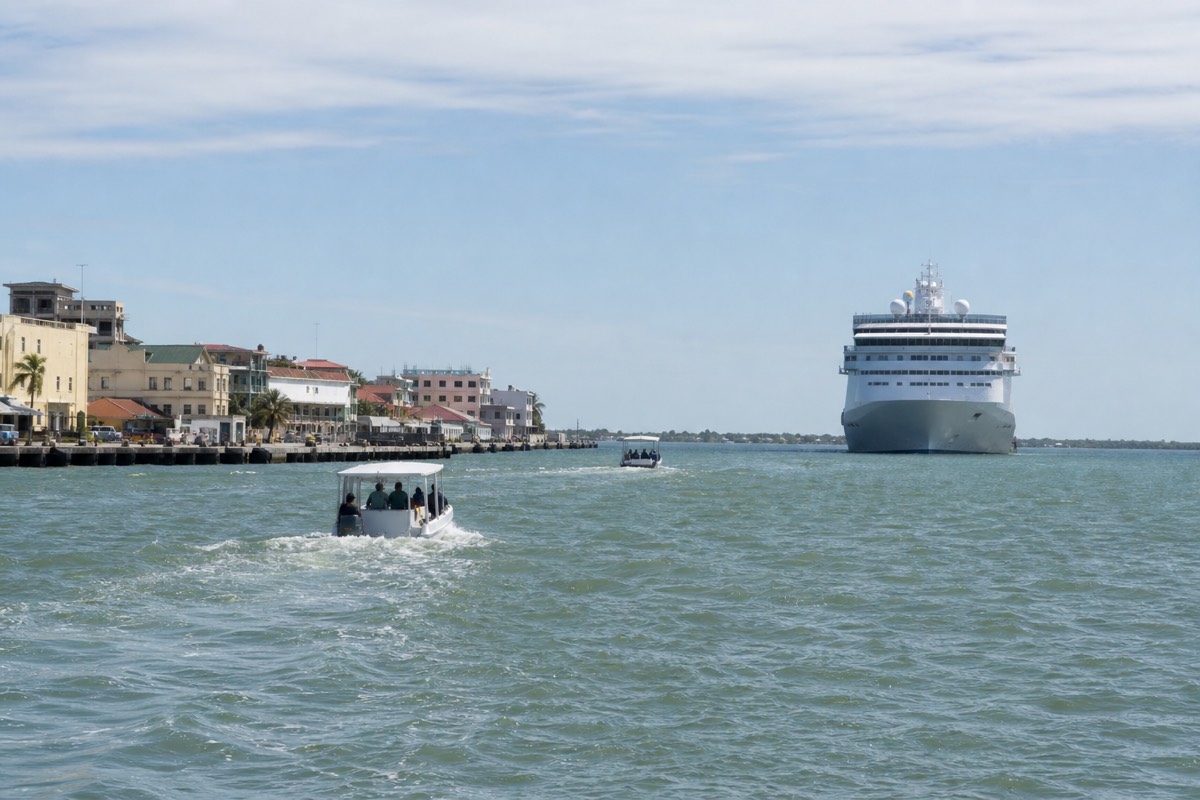
Belize is one of the odder stops on a western Caribbean itinerary. The reef offshore is the second largest on the planet and the snorkeling genuinely deserves the reputation, but the port itself is built around a bottleneck that most first-time visitors do not price in until they are standing in a tender queue watching the morning burn off. Getting a good day here is less about picking the prettiest reef and more about doing honest arithmetic before you book anything.
The port-day clock, and where it goes
Transit figures are typical door-to-door allowances for the Belize City anchorage in normal weather, not published schedules, and tender queues move them. Reserve entry and tour prices are read off the official reserve page and the current listings of the trips featured on this site, which move with season and group size.
Can you snorkel the Belize Barrier Reef on a cruise port day?
Yes. The Belize Barrier Reef runs the length of the coast and sections of it lie within reach of a Belize City port call, so a half-day snorkel trip is realistic on most itineraries. What is not realistic on a standard nine-hour stop is a full-day island trip out of San Pedro or Caye Caulker, because the transfers eat the day.
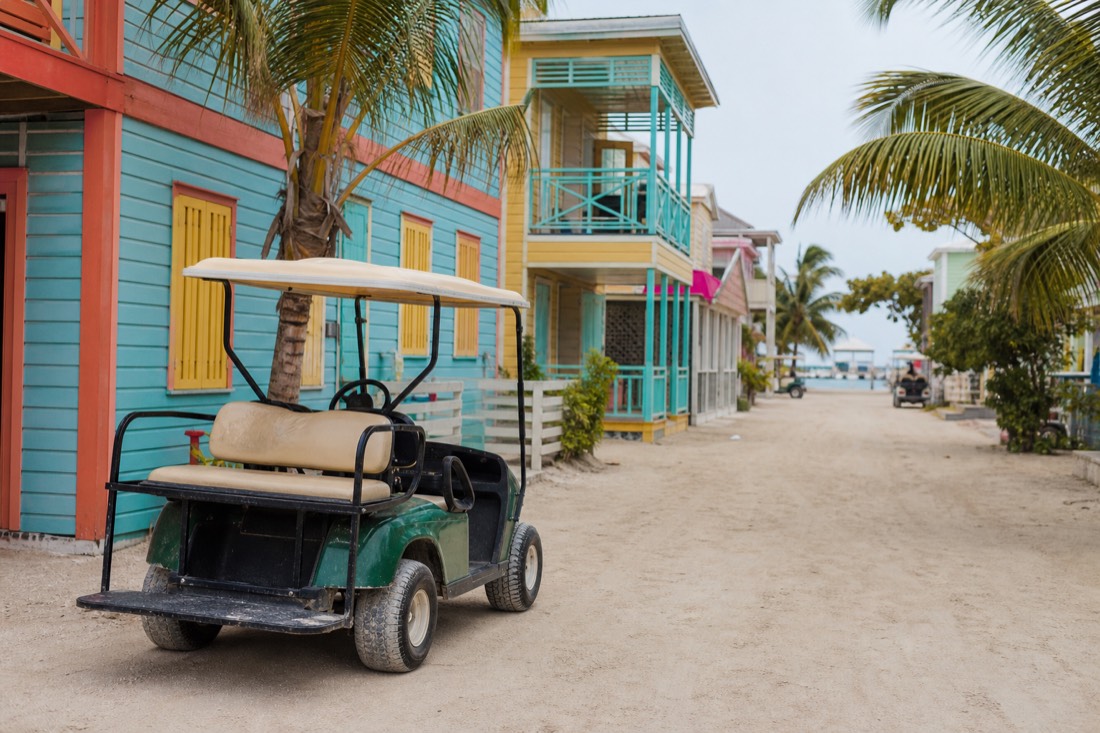
The reef here is part of the Mesoamerican system, inscribed by UNESCO in 1996 across seven protected areas. That listing is the reason the water is in the condition it is in, and it is also the reason a lot of the best snorkeling sits inside marine reserves with their own entry fees and their own boat access rules.
For a cruise passenger, the practical division is simple. Trips that leave from the Belize City waterfront and run out to the nearer reef and mangrove systems fit a port call comfortably. Trips that first move you to one of the cayes and then out to the reef are excellent trips, and they are what most of this site covers, but they belong to a different kind of day. If you have a long port call, an overnight, or a night booked either side of your sailing, the island trips open up and they are worth the effort.
| Stage of the port call | Typical allowance | What quietly eats it |
|---|---|---|
| Arrival, anchoring and clearance | 30 to 60 minutes after the posted arrival time | Tender tickets are released by deck or by tour group, not all at once |
| Tender ashore | 20 to 30 minutes on the water | Queues of 30 to 45 minutes when several ships share the anchorage |
| Usable time ashore | Whatever is left | This is the only number that matters, and it is smaller than the brochure suggests |
| Return tender | 20 to 30 minutes, last boat well before departure | Most lines stop tendering 30 to 60 minutes before all aboard |
| All-aboard cushion | 30 to 60 minutes before the ship sails | Independent passengers are expected to build their own margin on top |
Why does Belize City send cruise passengers ashore by tender?
Belize City has no deep-water cruise pier. The approach is shielded by a long, shallow shelf and the reef system itself, so large ships anchor several miles out and shuttle passengers ashore on tender boats. Every itinerary here loses roughly an hour of usable time to that shuttle before anyone gets wet.
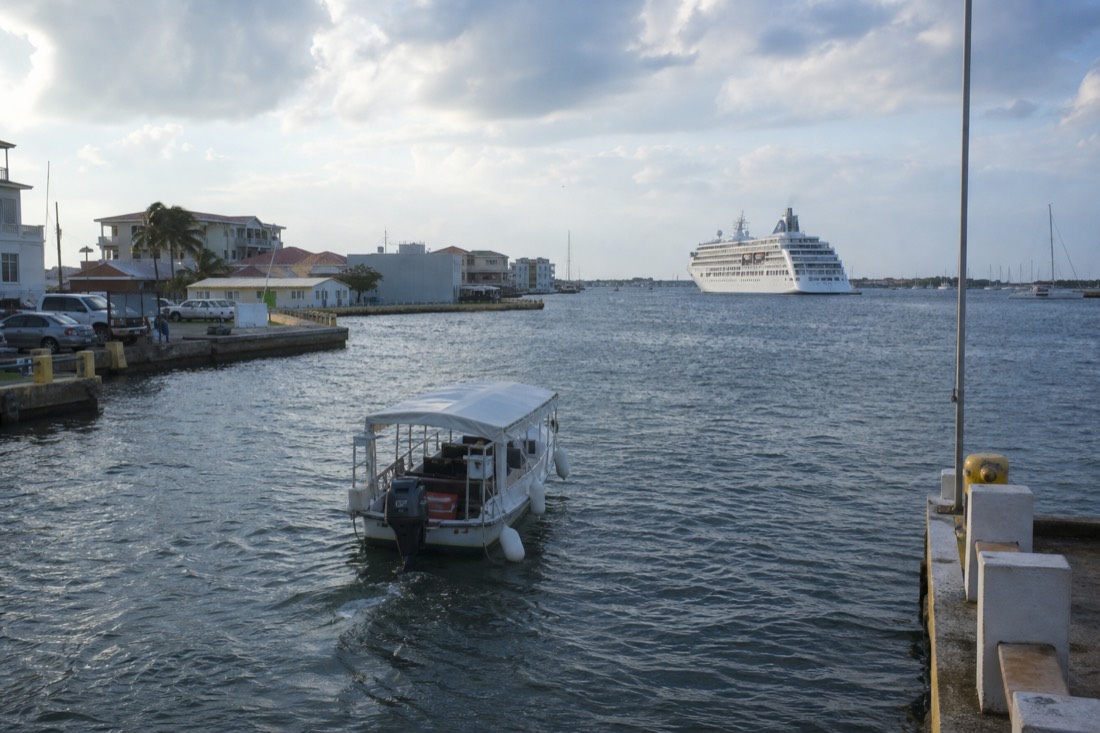
This is not a temporary situation or a construction delay. The shallow shelf that makes the reef possible is the same shelf that keeps deep hulls at a distance, and successive pier proposals have come and gone without a berth appearing. Ships anchor, lower their tenders, and run them in relays to the terminal complex on the waterfront. On a quiet day with one ship in, it works well. On a day with three ships sharing the anchorage, the ride is the short part and the queue is the long part.
The tender operation also runs in reverse at the end of the day, and that return leg is where independent bookings go wrong. Cruise lines typically close tendering some time before the published all-aboard, which means your real deadline ashore is earlier than the one printed on your card. Work backwards from the last tender, not from the sailing time, and you will make far better decisions about which excursion to take.
| Destination from the anchorage | One-way transit | Round trip | What that leaves on a nine-hour call |
|---|---|---|---|
| Mainland waterfront and terminal area | 20 to 30 min tender | About 60 min | Roughly five usable hours |
| Nearer reef and mangrove sites by local boat | Tender plus 20 to 40 min boat | About 2 hours | Roughly four hours, enough for a half-day trip |
| Caye Caulker | Tender plus about 45 min fast ferry | About 2.5 hours | Roughly three hours on the island, before any reef time |
| San Pedro, Ambergris Caye | Tender plus roughly 75 to 90 min ferry | About 4 hours | Two hours or less, which is not a snorkel day |
Those ferry legs are typical published crossings rather than guarantees, and the operators adjust them for sea state. Read them as planning allowances. The point is the shape of the numbers, not the last five minutes of any one of them.
Tender boarding is controlled by the ship and port. A snorkeling reservation cannot grant earlier tender access or remove the last-tender deadline.
How much of a port call is actually usable once tendering is done?
Take your scheduled port hours, subtract about an hour for the tender round trip, another 30 to 60 minutes for clearance at the start, and a 30 to 60 minute cushion before the last tender. A nine-hour call realistically leaves five usable hours ashore, and a seven-hour call leaves closer to three and a half.
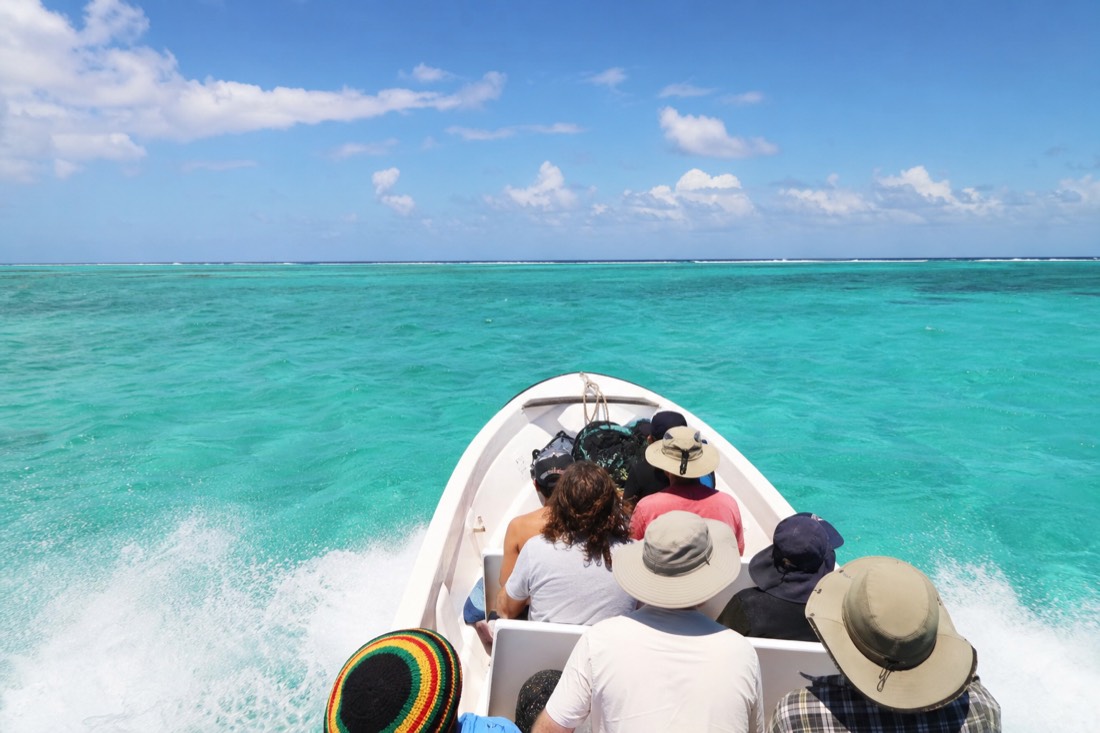
Five hours sounds generous until you lay a snorkel trip across it. A reef trip needs boarding time, a safety briefing, transit to the first site, forty minutes or so in the water at each stop, transit back, and then the walk to the tender pier. Two good in-water stops fill a half day without anyone dawdling. Three is possible on a well-run boat leaving from the waterfront. Four, which is what the island-based trips deliver, needs the full six to eight hours those operators actually schedule.
There is also a weather variable that no schedule shows. A brisk northerly front in winter can slow the crossing, stir up the water, and push a captain to swap a planned site for a sheltered one. That is the right call every time, and it is another reason to book a trip with slack in it rather than one that only works if everything runs to the minute. Our team plans around the calendar for exactly this reason, and which months deliver the calmest water is worth reading before you pick a sailing date.
| Snorkel format | Time it needs | Fits a nine-hour port call? |
|---|---|---|
| Single-site reef stop from the waterfront | 2 to 3 hours | Comfortably, with time left over |
| Two-stop half-day reef trip | 3.5 to 4.5 hours | Yes, if you are on an early tender |
| Reef plus a mangrove or manatee stop | 4 to 5 hours | Tight, and only with a port-day operator |
| Full-day island trip from Caye Caulker | 6 hours plus ferry legs | No, unless the call is unusually long |
| Full-day island trip from San Pedro | 7 to 8 hours plus ferry legs | No. This is a pre or post cruise day |
Which Belize snorkeling sites are realistic from the cruise port?
Hol Chan Marine Reserve and Shark Ray Alley are the country's signature snorkel stops, but both sit off Ambergris Caye, roughly four hours of round-trip transit from the anchorage. On a standard port call the realistic targets are the closer reef and mangrove sites reachable directly from the Belize City waterfront.
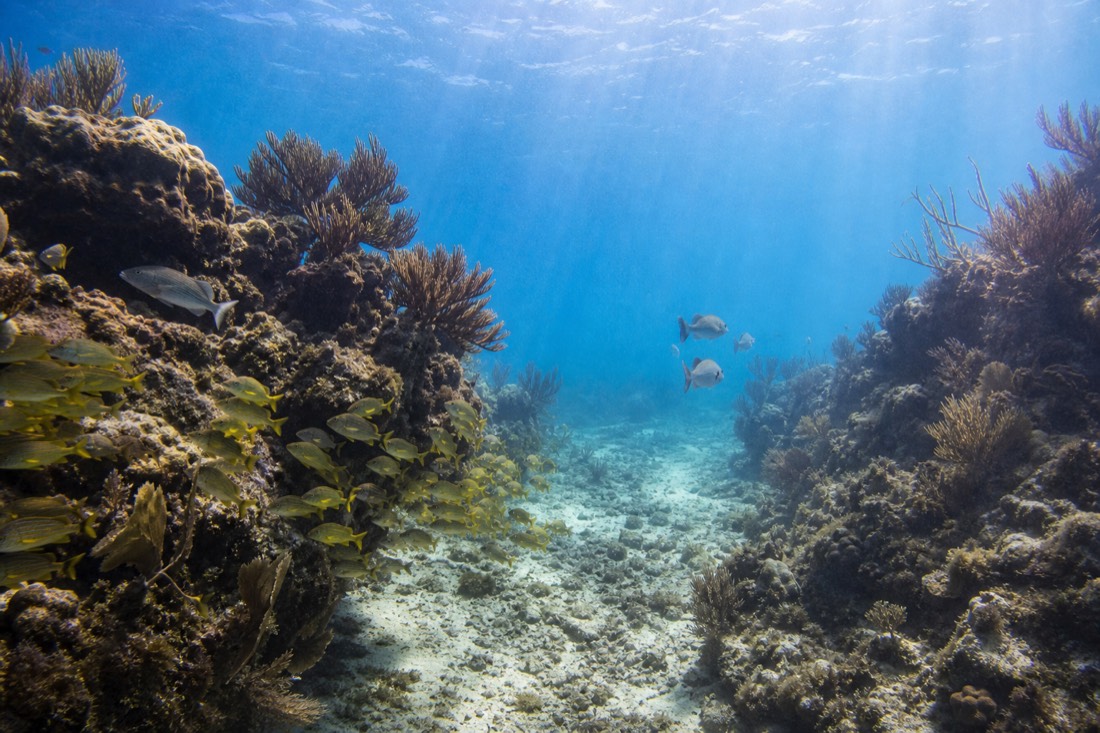
That is the honest version, and it is not the version most cruise forums give. Hol Chan is a cut through the reef where the wall drops away and the fish stack up in the current, protected since the late 1980s and now the busiest snorkel site in Belize. The reserve charges its own entry, currently around fifteen US dollars per person, published on the reserve's official page. Shark Ray Alley, a shallow sand flat a short hop away where nurse sharks and southern stingrays have gathered around fishing boats for decades, is part of the same reserve system and usually visited on the same trip. If you want to understand what those two sites actually deliver in the water, our full Hol Chan and Shark Ray Alley guide covers the current, the depth and the wildlife in detail.
The Great Blue Hole is the other name people arrive with, and it is worth setting expectations honestly: it is a deep dive site inside Lighthouse Reef Atoll, a long way offshore, and it is a flight or a very long boat day away from the port. Snorkelers see the rim, not the hole. We wrote an honest assessment of the Blue Hole for snorkelers because it is the single most common mismatch between what visitors picture and what the day actually is.
| Site | Access base | Realistic on a standard port call? | Note |
|---|---|---|---|
| Nearer barrier reef sites off Belize City | Waterfront, direct | Yes | The default for port-day operators |
| Coastal mangrove and manatee areas | Waterfront, direct | Yes | Often paired with one reef stop |
| Hol Chan Marine Reserve | Ambergris Caye | Only on a long call or a port-day charter built for it | Reserve entry around $15 per person |
| Shark Ray Alley | Ambergris Caye | Same as Hol Chan, usually visited together | Nurse sharks and rays, wild and never guaranteed |
| Mexico Rocks | Ambergris Caye, north | No | Shallow coral garden, a caye-based half day |
| Turneffe Atoll | Offshore atoll | No | Full-day boat trip from the cayes |
| Great Blue Hole and Lighthouse Reef | Outer atoll | No | Flight or long charter, primarily a dive site |
| Silk Cayes and southern reserves | Placencia and Hopkins | No | A different coast entirely |
Do the island tours on this site fit a cruise port day?
Mostly not, and we would rather say so than sell you a day that does not work. The trips we feature leave San Pedro and Caye Caulker between 8:00 and 10:00 in the morning and run six to eight hours. Those departure times land before a typical tender queue clears, so they suit a pre or post cruise night, an overnight call, or a stay on the cayes.
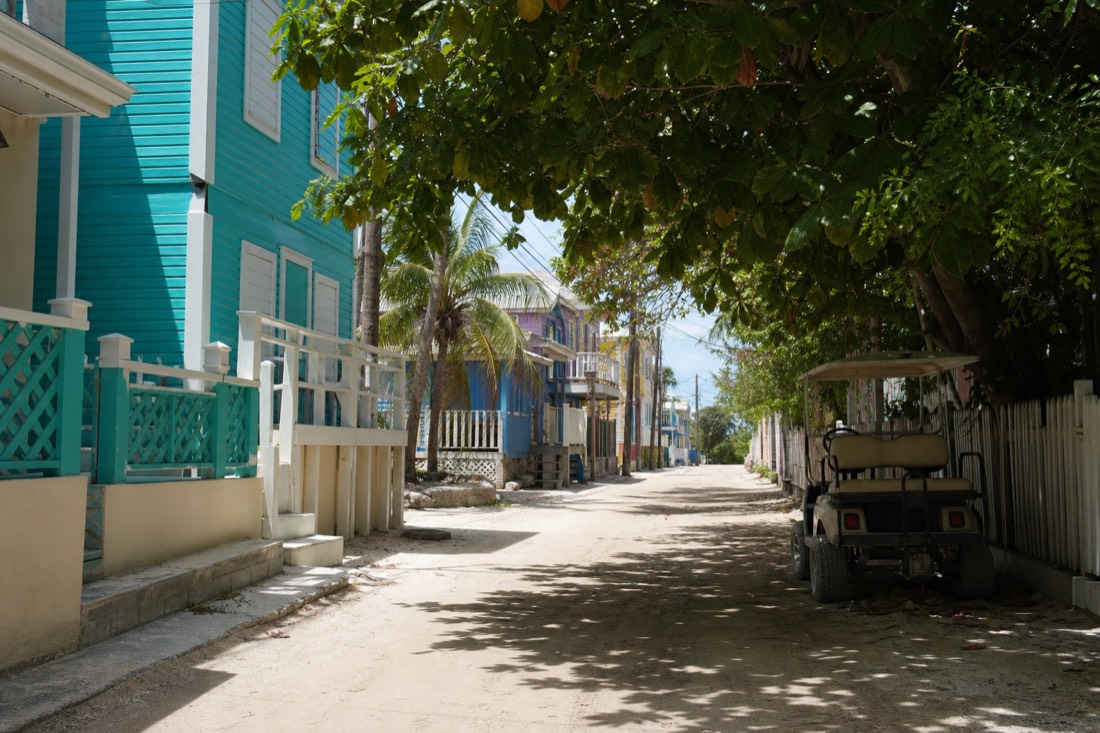
Look at the real schedules rather than the marketing. The four-stop San Pedro reef day starts at 8:00 AM at the beachfront office and runs eight hours before the boat comes back in. The seven-stop run out of Caye Caulker begins at 9:00 AM at the operator's office and returns to the island at 3:00 PM, which then leaves you a ferry ride from the mainland and a tender ride after that. Neither of those fits inside a nine-hour call that started with you queuing on deck at 8:15.
Where they do fit is the plan nobody thinks of on their first cruise: book a night in San Pedro or Caye Caulker before you board, or after you disembark, and take the reef day properly. Belize Snorkeling Tours exists because these operators run genuinely good boats, and a rushed version of a good boat day is still a rushed day. If you are considering that, the case for basing yourself on Caye Caulker and the San Pedro side of the reef set out what each island gives you.
| Featured trip | Departs | Length | Port-day fit |
|---|---|---|---|
| Four-stop San Pedro reef day | 8:00 AM, San Pedro | 8 hours | No. Pre or post cruise, or a caye stay |
| Seven-stop run out of Caye Caulker | 9:00 AM, Caye Caulker | 6 hours, back at 3:00 PM | No on a standard call, workable on a long one |
| Private charter from Ambergris Caye | 8:10 AM, San Pedro dock | 7 hours, route customisable | Not a Belize City port departure; do not assume it fits a tender day |
| Ship-sold Belize snorkel excursion | Timed to the tender operation | 3 to 5 hours | Yes, by design |
Should you book the ship's excursion or an independent snorkel tour?
Book through the ship when the port call is short and you cannot absorb the risk of missing all aboard. Book independently when you have a long call, an overnight, or a night on either side of the cruise, because you get a smaller boat, a better price and a guide who is not managing ninety people.
The premium you pay a cruise line is not really for the snorkeling. It is for one guarantee: if the ship's own excursion runs late, the ship waits or the line gets you to the next port. That guarantee is worth real money on a tight day and worth very little on a relaxed one. Independent operators in Belize are, in our experience working with them, punctual and professional, but no operator can control a tender queue that has three ships feeding it.
A private itinerary can offer useful flexibility, but its starting point still matters. The verified Belize City reef shore excursion includes port pickup and return. A seven-hour private boat from San Pedro is not a substitute: it also requires reaching Ambergris Caye and getting back within your tender deadline.
| Factor | Ship-sold excursion | Independently booked tour |
|---|---|---|
| Missed-ship protection | Covered by the cruise line | Your responsibility |
| Price | Highest, the guarantee is priced in | Usually materially lower |
| Group size | Often large, multiple boats | Small boats, several featured trips cap at 8 to 10 |
| Tender priority | Yes, excursion groups are called first | No, you go with general disembarkation |
| Itinerary flexibility | Fixed | High, especially on a private charter |
| Best suited to | Short, single-day port calls | Long calls, overnights, pre and post cruise nights |
What does a cruise-day snorkel trip in Belize cost?
The tour price is the largest line but not the only one. Reserve entry at Hol Chan runs around fifteen US dollars per person, ferry fares to the cayes are separate from every tour price, and towels and gratuities are listed as not included on most of the trips featured here. Shared island days start around $110 to $125 per person.
Those starting prices are read off the operators' current listings and they move with season and group size, so treat them as a floor and check the live listing before you budget. What matters more for a cruise passenger is which costs are bundled. Several of the featured trips fold all marine park and reserve fees into the ticket, which removes a cash transaction on the boat. Others cover the Hol Chan entry specifically. Reading that line before you book saves an awkward moment when the ranger boat comes alongside.
Private charters price differently and the per-person number looks alarming until you notice it buys the whole boat and the whole schedule. For two couples on a tight port day, control of the clock is a real product, not a luxury.
| Line item | What we can pin down | Note |
|---|---|---|
| Hol Chan Marine Reserve entry | Around US$15 per person | Bundled into the fee line on several featured trips |
| Shared full-day island trip | From US$110 to US$125 per person | Starting prices on the current listings, subject to change |
| Private charter from Ambergris Caye | Historical private-boat quote; check the full boat total | Whole-boat product, itinerary under your control |
| Ferry between the mainland and the cayes | Published by the ferry lines, changes | Not included in any tour price |
| Towel | Listed as not included on most featured trips | Bring one from the cabin |
| Gratuities | Optional, listed as not included | Carry small US bills, widely accepted |
| Ship-sold excursion | Priced by the cruise line | The premium buys the missed-ship guarantee |
What happens if an independent tour runs late?
If you booked independently and miss the last tender, the ship sails without you and getting to the next port is your problem and your expense. Cruise lines are explicit about this. The practical defence is a two-hour buffer between your tour's stated end time and the last tender, not a one-hour one.
Late returns in Belize usually come from one of four places, and none of them is an operator being careless. Weather turns and the captain slows the crossing. A ranger inspection holds a boat at the reserve boundary. A ferry runs behind because the earlier one did. Or the tender queue at the end of the day is longer than the one in the morning, which happens routinely because everybody comes back at once.
Build for those instead of hoping. Take the earliest tender you can get, tell your operator you are a cruise passenger and give them your all-aboard time, keep the ship's port agent number in your phone, and stop treating the printed all-aboard as your deadline. Your deadline is the last tender, and it is earlier.
| Risk | How it actually shows up | What reduces it |
|---|---|---|
| Morning tender queue | You are ashore an hour later than planned | Be at the tender lounge early, before the general call |
| Weather slows the crossing | Captain reduces speed, stops get shortened | Book a shorter trip in winter front season |
| Ferry delay on a caye transfer | You miss the connection back | Avoid ferry-dependent plans on a standard call |
| Evening tender backlog | Everyone returns in the same 90 minutes | Return two hours before the last tender, not one |
| Operator has no idea you are on a ship | Nobody prioritises your return | Say so at booking and again at the dock |
There is no verified missed-ship guarantee for this independent excursion. If the buffer is inadequate, use an excursion arranged by your ship or keep the day ashore.
Is Belize City safe on a port day?
The US State Department currently places Belize at Level 2, exercise increased caution, and singles out Southside Belize City at Level 3, reconsider travel. Cruise passengers on organised excursions and in the waterfront tourism area are outside that Southside zone, and the standard advice is to stay within it rather than wander.
That distinction matters and gets flattened in most cruise chatter. The advisory is not a blanket warning about the country, and Belize's tourism corridors, the cayes above all, are a different environment from the neighbourhood the Level 3 note refers to. Read the current advisory in full rather than a summary of it, because it is updated and the detail is the useful part.
On the water, the risks are the ordinary ones: sun, current, and overestimating your swimming. Belize also restricts reef-harmful sunscreens in its marine reserves, so reef-safe mineral sunscreen is required or strongly encouraged depending on where you are, and several operators supply it. We go through the wider picture in our honest look at safety for snorkeling travellers.
What should you carry ashore for a snorkel day?
Swimwear worn under your clothes, a towel from the cabin, reef-safe mineral sunscreen, a rash guard, small US bills, your ship card and a waterproof pouch. Gear is provided on every trip featured here, so leave your own mask unless it is a prescription one, which several listings specifically exclude.
The towel point is the one that catches people. Personal towels appear on the not-included list of every featured trip, and a cruise ship cabin has plenty. Change into swimwear before you go ashore too, because boat changing space ranges from a curtained corner to nothing at all, and the minutes matter more here than they would on a resort day.
US dollars circulate freely in Belize alongside the Belize dollar at a fixed rate, so small bills cover tips and drinks without a currency stop. Leave jewellery in the safe, take a phone in a sealed pouch rather than a camera you would mourn, and if you wear glasses, know that prescription masks are usually a rental you arrange in advance rather than something on the boat. For the full kit list, including the fit issues that ruin more snorkel days than weather does, see our first-timer's packing checklist, and if this is your first time face-down in open water, how beginner-friendly Belize really is is the honest answer.
| Item | Provided on the featured trips? | What to do |
|---|---|---|
| Mask, snorkel and fins | Yes, on all of them | Leave your own unless it is prescription |
| Prescription mask | No, listed as not included | Arrange in advance or wear contacts |
| Towel | No, listed as not included | Take one from your cabin |
| Sunscreen | Varies, some trips supply reef-safe | Bring mineral sunscreen anyway |
| Lunch and water | Yes on the full-day trips | Check the listing for half-day port trips |
| Reserve and park fees | Yes on several featured trips | Confirm before you board, carry cash if unclear |
| Gratuities | No, optional and not included | Small US bills |